Table Of Content

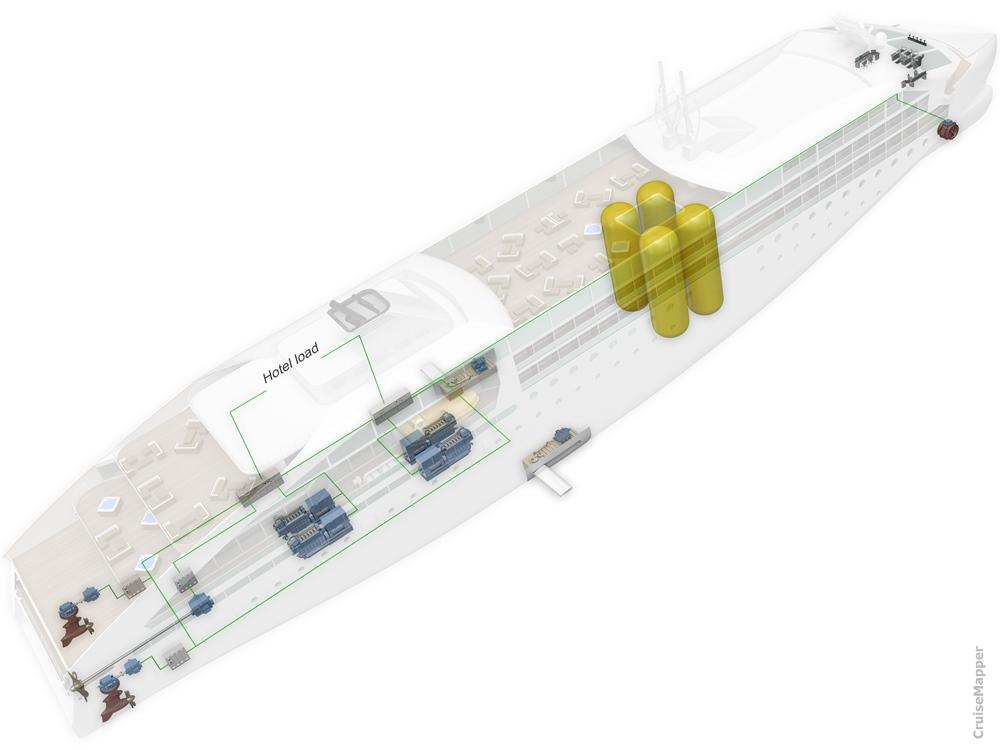
Norsepower's wind propulsion system was also installed on VIKING LINE's newest vessel (still unnamed) scheduled for delivery in 2020. The China-built ferryboat is equipped with two Norsepower-produced rotor sails, doubling its wind power potential. The next scheme shows the dual-engine powerplant (Wartsila) and propulsion (Azipod) of the cruise ferryTallink Megastar. This ship is the biggest "floating superstore" on the Baltic Sea, featuring a 2-deck retail shopping complex and the unique self-service option called "Q-shopping". The RoPax vessel uses LNG as prime fuel and MDO (marine diesel oil) as secondary fuel.
Eco-friendly Technology
Since bunkering mostly proceeds before the voyage or during port visits, safety remains important. Moreover, the nature of cruise ships makes them even more aware of the possible hazards. The LNG bunker uses the standard coupling at the selective terminals available globally. Hence, the power generation fuel requirements onboard cruises are almost 10 times a standard bulk carrier. This also includes auxiliary services like steam generation and boiler operations.
Our Cruise Ships

As a result, larger ships have larger engines and, consequently, higher gas consumption. The size and speed of these enormous vessels affect how much fuel they require to move. Naturally, a small economy car will use less gas to travel further than a large utility truck. There is always hope for greater fuel efficiency even though cruise ships grow in size.
Read Next: Park & Cruise Hotels for Every Port in America
However, cruise lines are increasingly transitioning to energy-efficient LED lighting, which consumes less power and has a longer lifespan. This switch not only reduces energy consumption but also minimizes the need for frequent bulb replacements. Additionally, the passenger capacity of a cruise ship also affects fuel consumption. More passengers mean more weight to carry, resulting in increased energy requirements for propulsion. The number of passengers also impacts the energy demand for onboard facilities such as accommodations, dining areas, entertainment venues, and other amenities.
Average Fuel Consumption per Day
Is Royal Caribbean’s Icon of the Seas Cruise Ship Really Sustainable? - The New York Times
Is Royal Caribbean’s Icon of the Seas Cruise Ship Really Sustainable?.
Posted: Tue, 23 Jan 2024 08:00:00 GMT [source]
In 2012, TUI used 54,463 tons of fuel, including 9,732 tons LSFO (low sulfur fuel oil), 40,880 tons HFO (heavy fuel oil) and 3,851 tons MDO (marine diesel oil). The gas consumption of cruise ships is a significant aspect of their operations, with these floating cities burning through vast amounts of fuel each day. Factors such as ship size, speed, route, and weather conditions all play a role in determining gas consumption. Despite efforts to improve fuel efficiency, cruise ships still have a considerable environmental impact. The average gas consumption of a cruise ship per day can vary significantly depending on numerous factors. These factors include the ship’s size, speed, route, weather conditions, and even the onboard amenities.
Search
This innovative maritime technology allows the engines to be started and stopped depending on the onboard electricity demand, which additionally improves fuel efficiency. Promas propulsion integrates propeller, hubcap, rudder bulb and the rudder into a single unit which can increase propulsion's efficiency by 3-8% (1-screw vessels) and by 2-6% (2-screw vessels). It also improves maneuverability, reduces fuel consumption and bad emissions. The new modular technology allows efficient and cost-effective custom-made systems to be built up from various existing and standard parts - mooring winches, anchor cable lifters, warping heads.
If you’ve ever had an experience like this, you can agree that carrying more weight requires more fuel. The cost to run a cruise ship is difficult to determine, as it varies based on many different factors. This is mainly due to the amount of fuel a large ship needs to stay afloat compared to a smaller ship. “The eco-conscious element of cruise is only going to grow,” Menzies said.
Another way to express this is to say that the ship consumes approximately 14 gallons of fuel for every mile it travels. Even within a single ship, the capacity of individual fuel tanks can vary, with some tanks designed to hold the primary fuel supply and others for reserve or emergency use. A large cruise ship, such as Royal Caribbean’s Harmony of the Seas, can carry approximately 1.33 million gallons (approximately 5 million litres) of fuel.
As technology continues to evolve, cruise ships of the future are likely to be even more environmentally friendly, offering a greener and more energy-efficient way to explore the world’s oceans. By carefully managing speed and itinerary, cruise lines can strike a balance between passenger comfort and fuel efficiency, ensuring a memorable and eco-friendly experience for travelers. As the industry continues to evolve, there is an ongoing focus on adopting sustainable practices that minimize fuel consumption and environmental impact. Understanding the fuel consumption of cruise ships is essential not only for environmental reasons but also for practical considerations such as cost management. Fuel is one of the most significant expenses for cruise lines, and optimizing fuel consumption can help reduce operational costs and make cruising more affordable for passengers.
Fuel for cruise ships is one of the highest operating costs for the cruise line. By some estimates, up to 20% of a cruise line’s expenditures are fuel related. It is worth noting that the transition to cleaner fuels and new technologies is a complex process that requires investment and infrastructure development. While many cruise lines are taking steps towards greener operations, there is still work to be done to achieve widespread adoption of cleaner and sustainable fuel options across the industry.
Despite efforts to improve fuel efficiency, cruise ships still consume a substantial amount of gas on a daily basis. As the cruise industry continues to innovate and embrace sustainable practices, the future of fuel consumption looks promising. With the industry’s collective efforts, cruise ships will continue to offer exceptional vacation experiences while protecting the environment and the destinations they visit.
Moreover, it is more expensive to produce than heavy fuel oil or diesel. Royal Caribbean has a series of upcoming LNG cruise ships, including the Icon of the Seas and Utopia of the Seas. Liquified natural gas has emerged as a more environmentally friendly alternative energy source for cruise ships. RMS Queen Mary 2 is equipped with exhaust gas economizers, using waste heat from engines to produce steam.
This electricity is primarily used on cabin decks (including for heating, hot water, lighting). The technology uses heat exchangers that evaporate a carrier fluid circulating in a closed system. This gas (at 2-bar pressure) drives a turbine, then a 100 kW generator produces electricity. Then Heat exchangers cool the carrier fluid to temperatures around 20 C / 68 F.




No comments:
Post a Comment